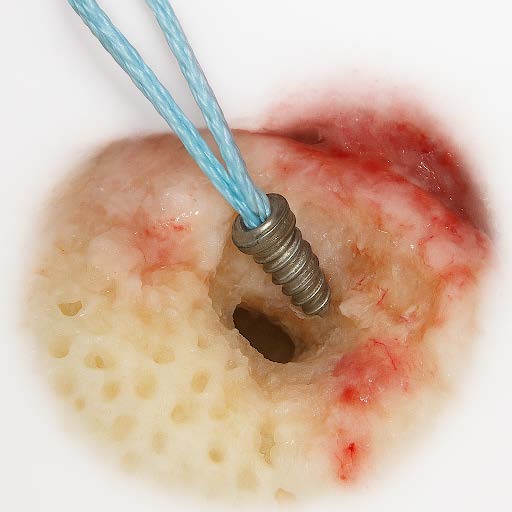
Ossentia Medical is developing a novel class of orthopedic bone anchors that deliver superior fixation in low-density bone — addressing a critical unmet need for the millions of patients with osteoporosis and osteopenia undergoing orthopedic surgery.
Ossentia Medical is a medical technology startup developing a novel class of orthopedic surgical devices based on Controlled Expansion Bone Anchor Technology (CEBAT) — a platform commercializing 30+ years of biomechanical research from Drexel University.
Our technology is built for the growing population of patients with osteoporosis and low bone density — a group for whom conventional bone anchors routinely fail. By combining immediate mechanical fixation with long-term biological osteointegration, we give surgeons a more reliable solution and patients a better chance at a full recovery.
Bone anchors are essential across many orthopedic surgical applications
Conventional bone anchors are made from non-expanding materials. In low-density bone — common in osteoporotic and elderly patients — they suffer from loosening and pull-out at dramatically higher rates.
1 Li et al. (2022). Journal of Clinical Medicine, 11(22), 6870 | 2 Tingart et al. (2004). American Journal of Sports Medicine, 32, 1466–1473
Bone anchors are essential across rotator cuff repair, ACL reconstruction, and fracture fixation — with millions of procedures performed annually in the U.S.
Over 54 million Americans are affected by osteoporosis or low bone density — the highest-risk population for anchor failure.
Anchor failures lead to poor patient outcomes and an estimated $300M in unnecessary U.S. healthcare costs annually from avoidable revision surgeries.
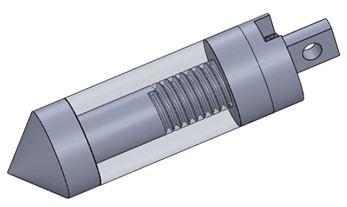
Ossentia Medical's CEBAT addresses the critical deficiencies of conventional bone anchors through dual-mode fixation — delivering both immediate mechanical strength and long-term biological integration.
Compression of the sleeve produces controlled lateral expansion, pressing firmly against the surrounding bone wall for strong, immediate fixation — even in compromised, low-density bone where conventional anchors fail.
The engineered porosity of the expansion sleeve promotes bone remodeling and osteointegration — bone actively grows into the implant, creating biological fixation that strengthens over time and densifies the surrounding bone.
The CEBAT platform is applicable across multiple orthopedic procedures — including rotator cuff repair, ACL reconstruction, fracture fixation, and osteochondral repair — addressing a broad and growing market opportunity.
Superior anchor hold in low-density bone through mechanical expansion and promotion of osteointegration and bone densification.
Reduced surgical failures during and post-surgery — enabling patients to regain function and avoid the physical and emotional burden of revision surgery.
Eliminating an estimated $300M in unnecessary U.S. healthcare costs per year — with impact likely 2–3× higher when considering all bone fixation procedures.*
* Based on failure rates and revision surgery costs for rotator cuff repair and ACL reconstruction in the U.S.
Ossentia Medical's technology has earned recognition and support from leading research institutions and innovation funds.
Seed investment from Drexel University's Innovation Fund in support of early-stage commercialization of the CEBAT platform technology.
Research grant to develop new controlled expansion composite materials for orthopedic implant applications.
Research grant to investigate controlled fluid-induced expansion properties, advancing the biological fixation mechanism of the CEBAT system.
Funding for prototype development and testing of the controlled expansion bone anchor, supporting the path toward clinical-grade manufacturing.
Research underlying the CEBAT technology has been published in 12 leading peer-reviewed journals, establishing a strong scientific foundation for the platform.
Decades of combined experience in medical device innovation, biomechanical research, clinical practice, and technology commercialization.
Whether you're a potential investor, strategic partner, clinical collaborator, or simply want to learn more about our technology, we'd love to hear from you.